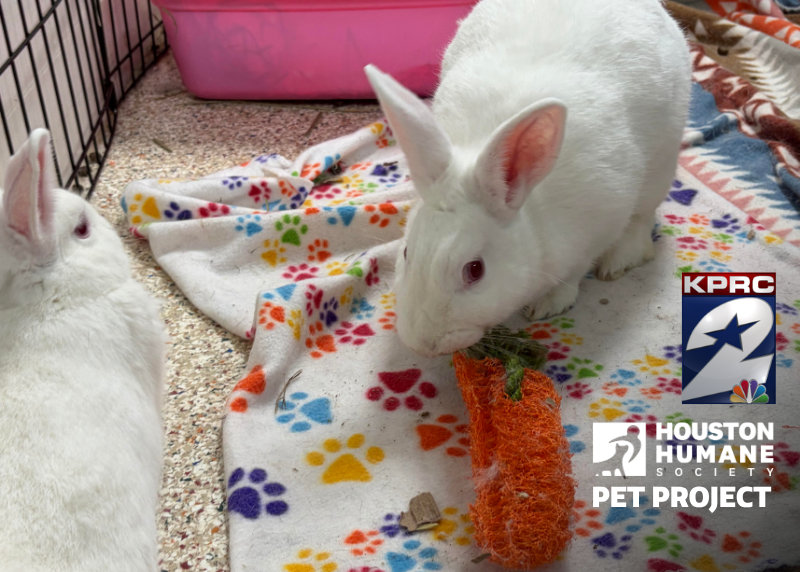
Blizzard, Olaf, and Stardust
More Than Meets the Eye: Meet Blizzard, Olaf, and Stardust
By Sadie Gilbert and Greg Hall
Rabbits, like all companion animals, come in a wonderful variety of colors, patterns, shapes, and sizes. While their appearance may be the first thing we notice, the color of a rabbit’s fur or eyes cannot tell us who they are or how much love they have to give.
Some of the most overlooked residents of our Mini Mammal Manor are our ruby-eyed white rabbits. Blizzard, Olaf, and Stardust are still patiently waiting for families of their own, but their story began long before they were ready for adoption.
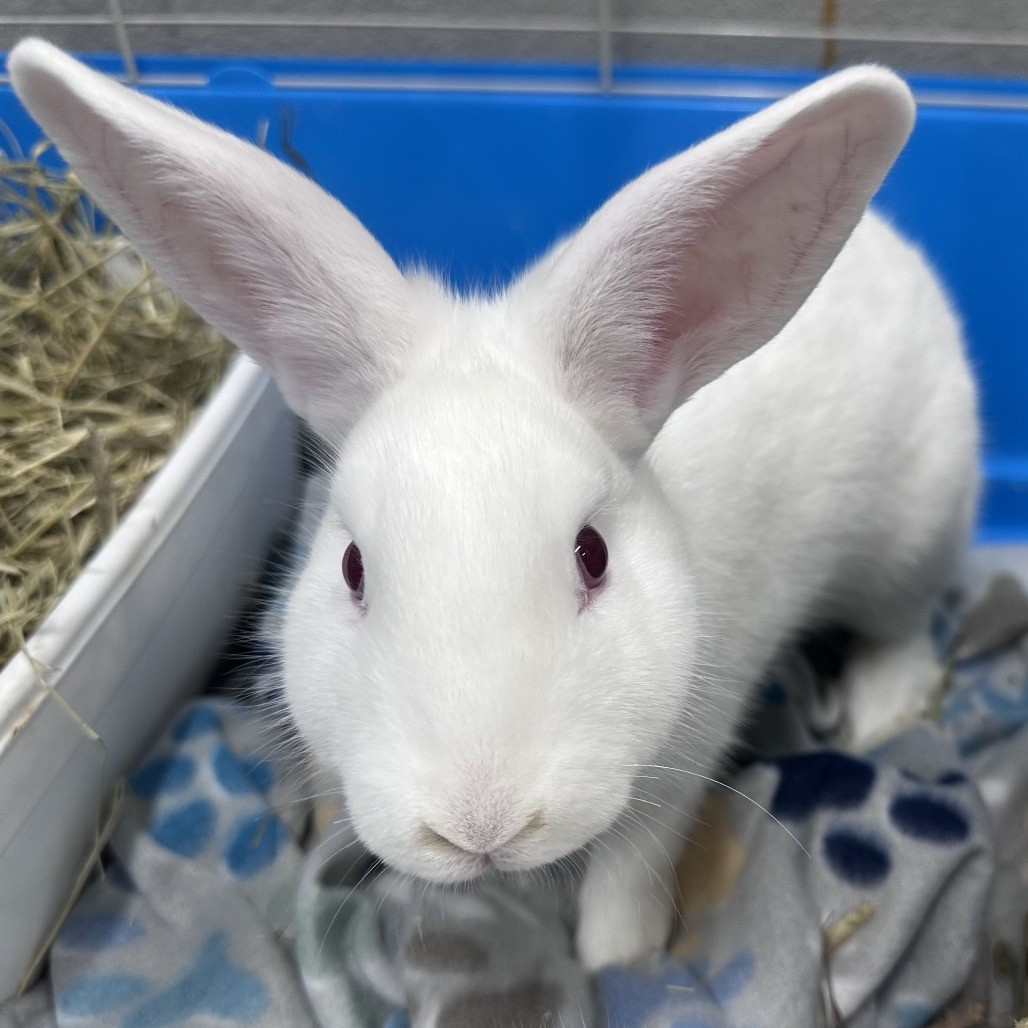
Their parents, Flurry and Frosty, arrived at the Houston Humane Society after a family became overwhelmed by several newborn and juvenile rabbits. Flurry was not even a year old when she came to us with a nursing litter and two older daughters who were still babies themselves: Blizzard and Olaf.
Flurry successfully raised her little ones until they were old enough to be weaned, but she had one more surprise in store for us. On a chilly December morning, our Exotics team arrived at work to discover five newborn kits tucked safely inside a nest of fur.
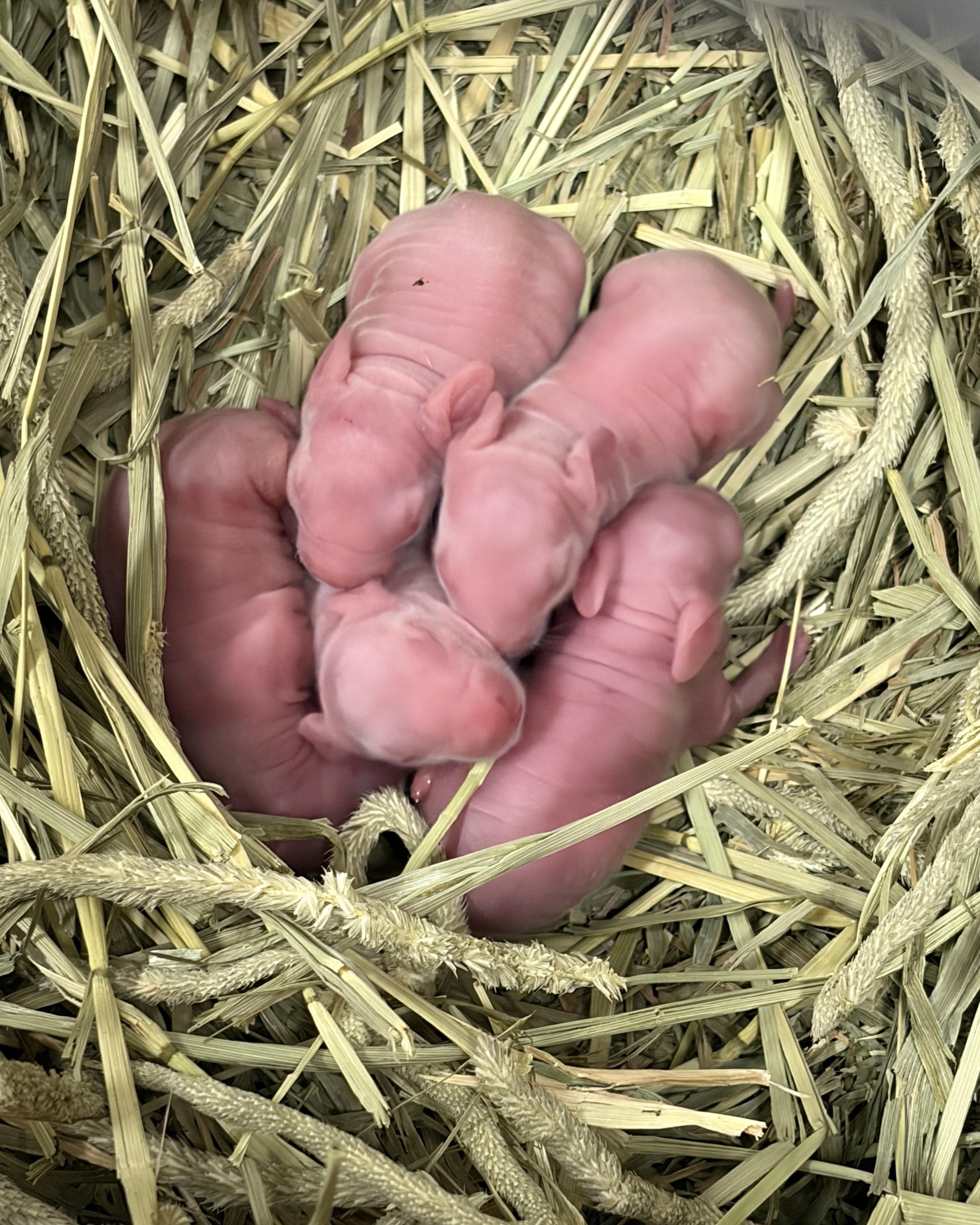
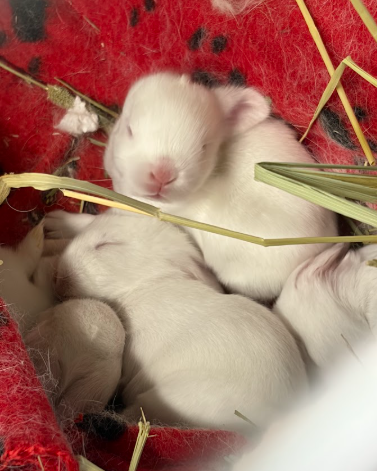
Before arriving at the shelter, Flurry and Frosty had not been separated. Because a rabbit’s pregnancy lasts only about 31 to 33 days, Flurry was already expecting another litter when she came into our care. Sadly, two of the newborns passed away shortly after birth, but the remaining three, Vega, Polaris, and Stardust, grew up right here at the shelter.
We watched them open their eyes, take their first curious steps outside the nest, and grow into playful young rabbits with personalities all their own. Our team loved and cared for them throughout every stage, doing everything possible to give them a safe and comfortable start to life.
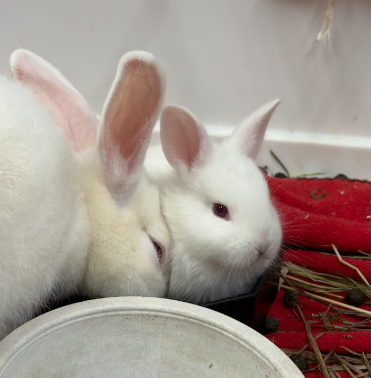
Once the rabbits were weaned and old enough to be spayed or neutered, members of the family slowly began finding homes. Yet Blizzard, Olaf, and Stardust are still waiting. We are not sure why, because they are truly wonderful rabbits.
When visitors walk through the Mini Mammal Manor, they often stop to tell us how adorable the rabbits are. Unfortunately, when they reach our ruby-eyed white rabbits, we frequently hear, “They’re cute, but their eyes freak me out.”
Learn more about albinism, the reason for their white fur and red eyes.
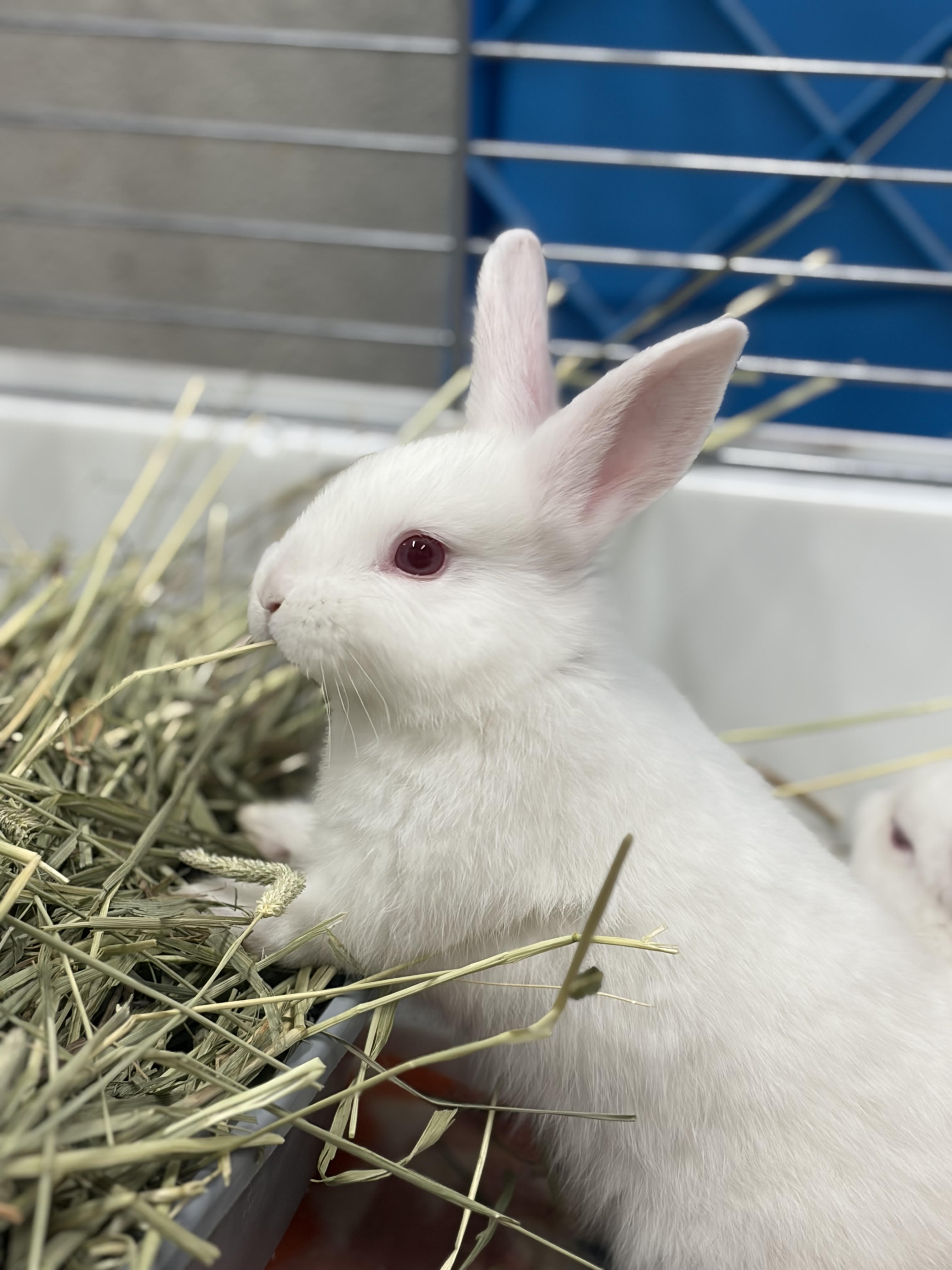
Everyone has personal preferences, and that is okay. We simply hope visitors will take a moment to look beyond first impressions. Fur and eye color are only surface-level traits. They cannot reveal a rabbit’s personality, the funny little habits that make our team laugh, or the special bond they might form with a family.
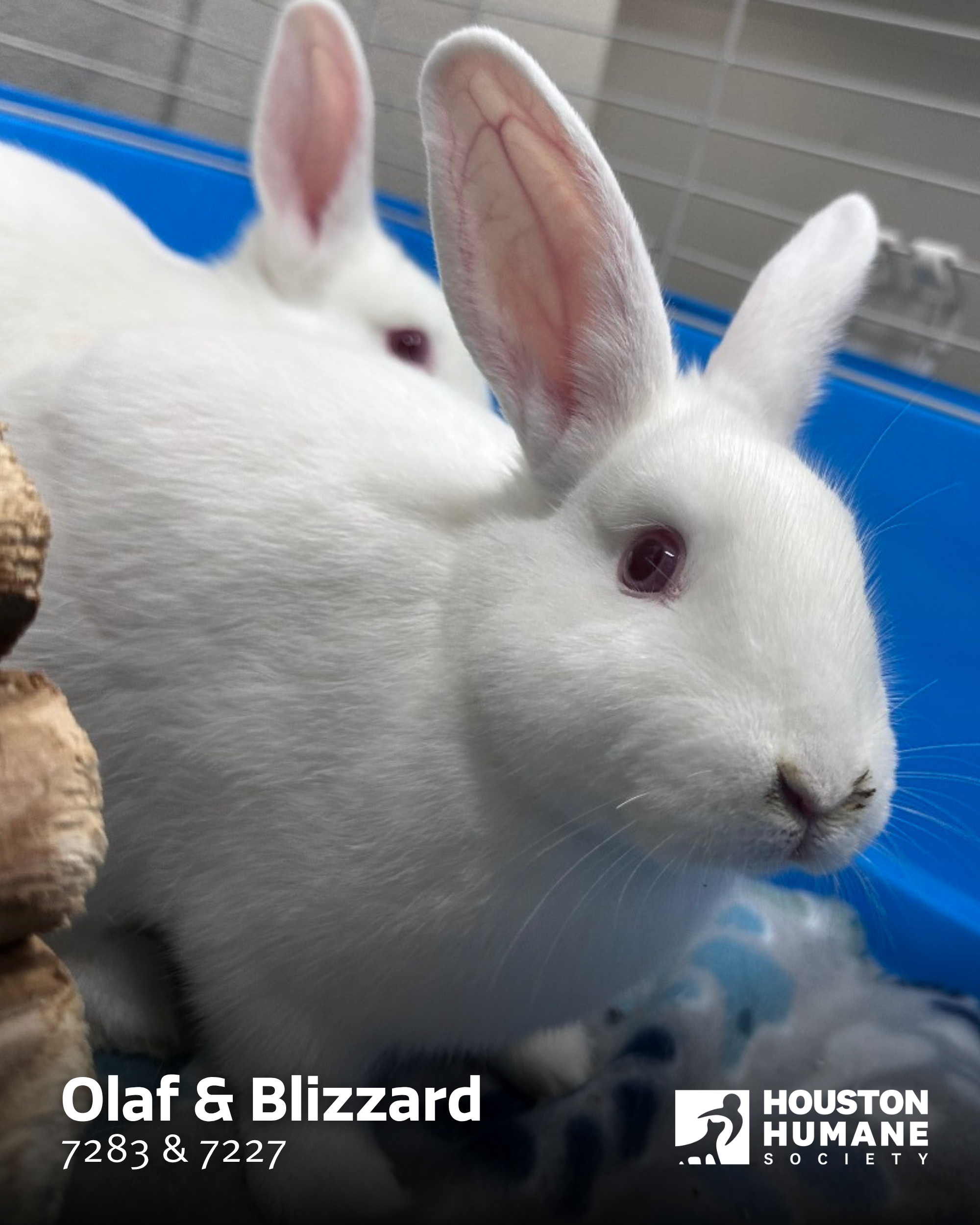
Blizzard and Olaf may be shy when meeting someone new, but once they feel comfortable, their affectionate personalities begin to shine. These bonded sisters love doing everything together, whether they are exploring a newly arranged enclosure, lounging side by side, tossing their toys around, or standing like two tiny meerkats each morning as they wait for pellets and fresh hay. Their antics are a highlight of our day, and they never fail to make us smile.
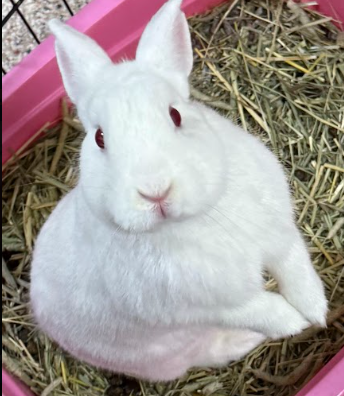
Stardust is also a little reserved at first, but patience is quickly rewarded. Once he knows you, he accepts snacks with great enthusiasm, performs excited binkies (rabbit version of zoomies) before breakfast, and curls up inside his house for cozy daytime power naps. He is gentle, endearing, and every bit as deserving of a loving home.
Blizzard, Olaf, and Stardust are so much more than their white coats and ruby-colored eyes. They are playful, affectionate, funny, and completely unique. All they need is someone willing to look a little closer and see the wonderful rabbits our team has known and loved from the very beginning.
Adopt Blizzard, Olaf, and Starburst
Albinism: The Original Morph
In today’s pet trade, genetic defects or conditions known as “Morphs” are the bread and butter of animal breeders in terms of producing novel animals worth more to buyers. The number and variety of morphs have increased not only in the breeding of birds and small mammals, but to an even greater extent, these morphs have defined the reptile trade for the last several decades.
Albinism is an inherited genetic disorder present at birth, caused by mutations in genes responsible for producing or distributing melanin. Melanin not only determines the color of the skin, hair, and eyes but also plays a crucial role in the development and function of the eyes. The condition occurs when offspring inherit defective genes from both parents, even if the parents do not show symptoms themselves.
While albino animals generally live long, full lives in captivity, there are obvious reasons that prey animals such as rabbits would not survive without their natural camouflage in the wild, where dramatically fewer albinos will survive to reach adulthood. The result is that albinism is rare to see in nature, but popular in the pet trade, where novelty can mean a larger paycheck for breeders.
Over time, as the albino morph became more and more ingrained in certain segments of the pet trade, the morph became fairly obsolete and commonplace in terms of added value. Animals such as rats, mice, and rabbits were commonly available as albinos, sometimes to the point of being more commonly sold than typical colors and patterns for a species.
This has had the effect that albinism remains a desirable trait in some areas of the pet trade (specific birds and reptiles), but has become so common as to be almost typical in other areas. This has had the net effect of seeming to make normal colors and patterns popular again among common small mammals in particular. The end result is that albinos of these species often linger in shelters, rescues, and pet stores for much longer than they otherwise might.
Due to a Houston Humane Society policy implemented last year, Houston Humane Society Wildlife & Exotics no longer adopts out unfixed exotic mammals, including rabbits. This was done out of an abundance of caution due to some cases of overpopulation we have seen in the last two years. This means that if a rabbit “slips the net” on intake so to speak, and gives birth to kits here at the shelter: those babies stay with us for 5-6 months before a veterinarian clears them for neuter/spay surgeries.
Due to this, some of our baby albino rabbits, which were born here at the shelter on 12-18-25, are still here. One simply hasn’t had many applications. The other two have been adopted and returned two times as a bonded pair. This situation is a combination of good policy when applied to animals with a less popular color morph. Stress factors run high for all residents in animal shelters, and will sometimes be notably higher for prey animals living within close proximity to predators. We mitigate this as much as possible in the space given, but sometimes rabbits do develop behavioral issues due to prolonged stress.
None of this means that they are “bad” rabbits. It simply means they are rabbits who have experienced a lot of change during a very important stage of their lives.They have grown up in the shelter. They have waited. Some have found homes and then experienced the confusion of being returned. And despite all of that, they are still deserving of the chance to have what every animal in our care ultimately needs: a safe, stable, loving home.
Sadie Gilbert is a Wildlife & Exotics Coordinator with five years of experience in animal care. She holds a degree in Animal Science from Tarleton State University and has had a passion for critters of all sizes since childhood. At home, she has a rabbit and two dogs who are all spoiled rotten!
Greg Hall currently leads the Wildlife & Exotics Team at Houston Humane Society since it was established in May 2024. He has over four decades of experience working with both native wildlife and exotic pets. Greg specializes in the care of reptiles and amphibians and cares deeply about improving their captive care and setting both adopters and animals up for success in the Exotics program. He is an AZA Certified Zoo & Aquarium Science Professional (CZASP) and Certified Interpretive Guide (CIG). He spent decades as a volunteer educator for TPWD, Scouts of America, Texas Master Naturalists and other organizations.