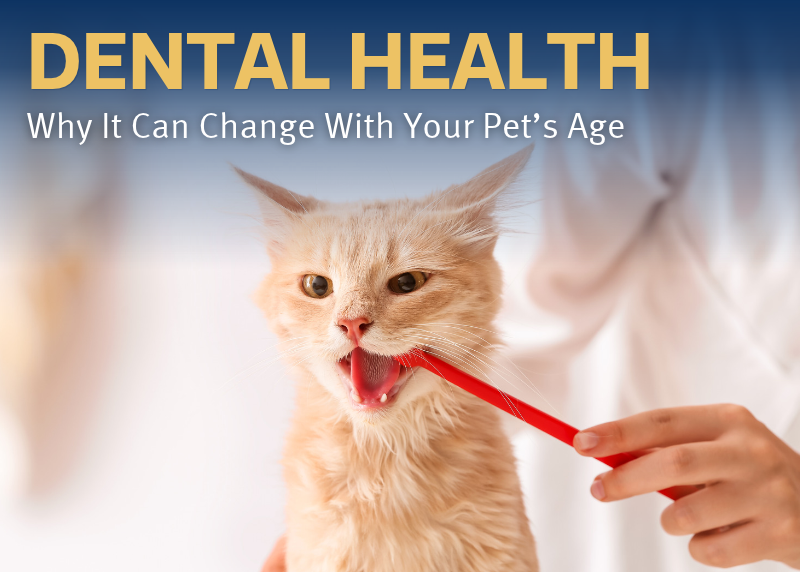
Why Your Pet’s Dental Health Can Change With Age
Just like people, pets can experience changes in their dental health as they grow older. A pet's teeth and gums can be affected by daily habits, genetics, diet, underlying health conditions, and the natural aging process. While dental problems can develop at any age, older dogs and cats may face an increased risk of plaque buildup, tartar, gum inflammation, tooth damage, and other oral health concerns.
Understanding how dental health can change over time can help pet owners recognize potential problems and provide appropriate care!
How Dental Health Changes Over Time
Young pets often have relatively healthy teeth and gums, although they can still develop dental problems if proper oral care is overlooked. As pets mature, plaque and tartar can accumulate on their teeth. Plaque is a sticky film of bacteria that forms naturally after eating, and when it is not removed, it can harden into tartar. Over time, this buildup can contribute to irritation and inflammation along the gumline.
As pets enter their senior years, plaque and tartar exposure may increase the likelihood of periodontal disease and other dental concerns. Older pets may also experience worn, broken, or missing teeth. Because dental problems can progress gradually, changes are not always obvious to owners until they become more serious.
Common Signs of Dental Problems in Older Pets
Pet owners should pay attention to changes in their companion's eating habits, behavior, and mouth. Some common signs of dental trouble include bad breath, red or swollen gums, excessive drooling, difficulty chewing, dropping food, pawing at the mouth, or reluctance to eat hard food. Pets may also become less interested in toys or activities that require chewing.
Visible changes can also provide important clues. Discolored teeth, significant tartar buildup, bleeding gums, loose teeth, or swelling around the mouth may indicate an oral health issue that deserves veterinary attention. Some pets may continue eating normally even when they are experiencing discomfort, so routine dental examinations remain important.
Why Senior Pets Need Consistent Dental Care
Dental care becomes particularly important as pets age because untreated oral disease can cause ongoing discomfort and damage to the structures supporting the teeth. In advanced cases, dental disease may make eating more difficult and negatively affect a pet's overall quality of life. Regular veterinary examinations allow oral health problems to be identified earlier and can help determine whether professional dental cleaning or other treatment is appropriate.
Senior pets may also have other age-related health conditions that can influence their veterinary care. A veterinarian can evaluate your pet's overall health and recommend a dental care approach that takes those factors into consideration.
Tips for Supporting Your Pet’s Dental Health
Pet owners can take several steps to help maintain their companion's oral health throughout every stage of life. Regular brushing with pet-safe toothpaste can help reduce plaque, while veterinarian-approved dental products may provide additional support. Providing appropriate chew products and maintaining routine veterinary visits can also contribute to better dental hygiene.
It is important to remember that home care does not replace professional veterinary examinations. Even pets with good daily dental routines can develop problems that are difficult to see without a thorough oral evaluation. Working with your veterinarian can help you establish a dental care routine that changes as your pet's needs change with age.
Access Innovative Care at Our Affordable Pet Clinic
Your pet's dental needs can change significantly from their early years through adulthood and their senior age. If your pet requires dental support, we urge you to contact one of the friendly team members at the Houston Humane Society Veterinary Clinic by calling or texting 713-433-6421. For years, our staff has continued to provide reliable veterinary care and pet surgery to visitors from Houston, TX and beyond. Ensure the comfort of your pets for years to come with the support of our walk-in animal clinic!
The Houston Humane Society Veterinary Clinic is conveniently located at 3100 W. Fuqua St., Houston, TX.