Ramses' Story: Why One Procedure Changed Everything
By Princess Bednarski, Livestock Manager
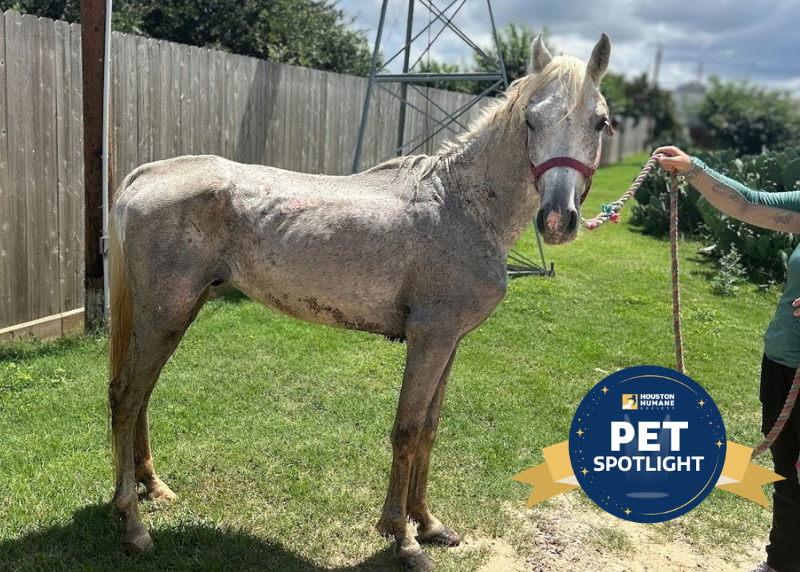
Sometimes gelding isn't about calming a horse down; it's about opening the door to a future. No horse proves that better than 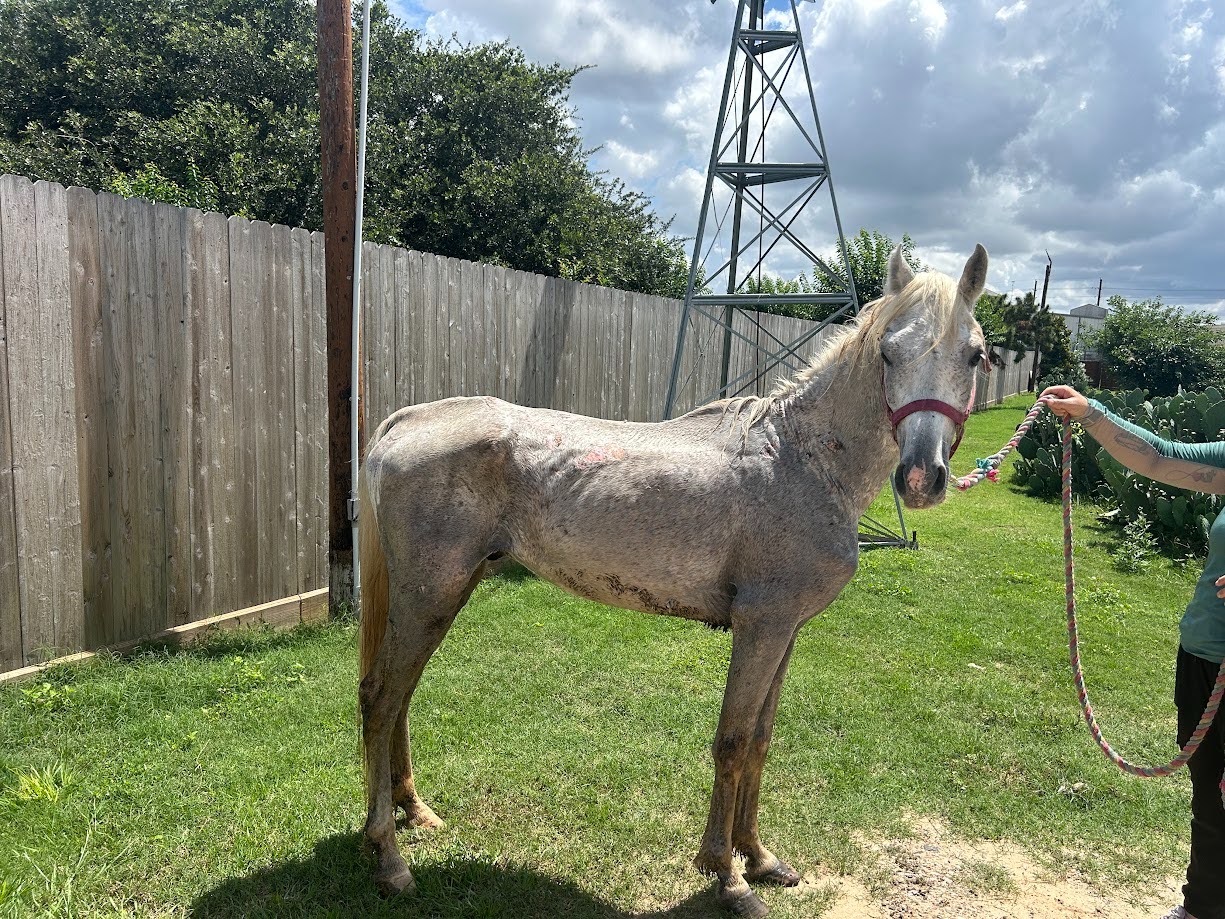 Ramses, an 8-year-old Arabian stallion rescued in Wharton County. If you’ve been following his story with Lisa Hernandez and KPRC Channel 2, you’ve seen his worst.
Ramses arrived at the shelter with his siblings, a small family that had been through a lot together. All were malnourished, with long feet and neglected teeth, but the fighting that stallions do made it impossible to keep them together. Ramses had to be separated from the very horses he came in with, isolated for everyone's safety, unable to live alongside the family he'd arrived with.
Being an intact stallion stacked the odds against him in another way, too. Fewer homes are equipped to handle a stallion. His options were limited, and his future uncertain.
So Ramses was gelded. And that one procedure changed everything.
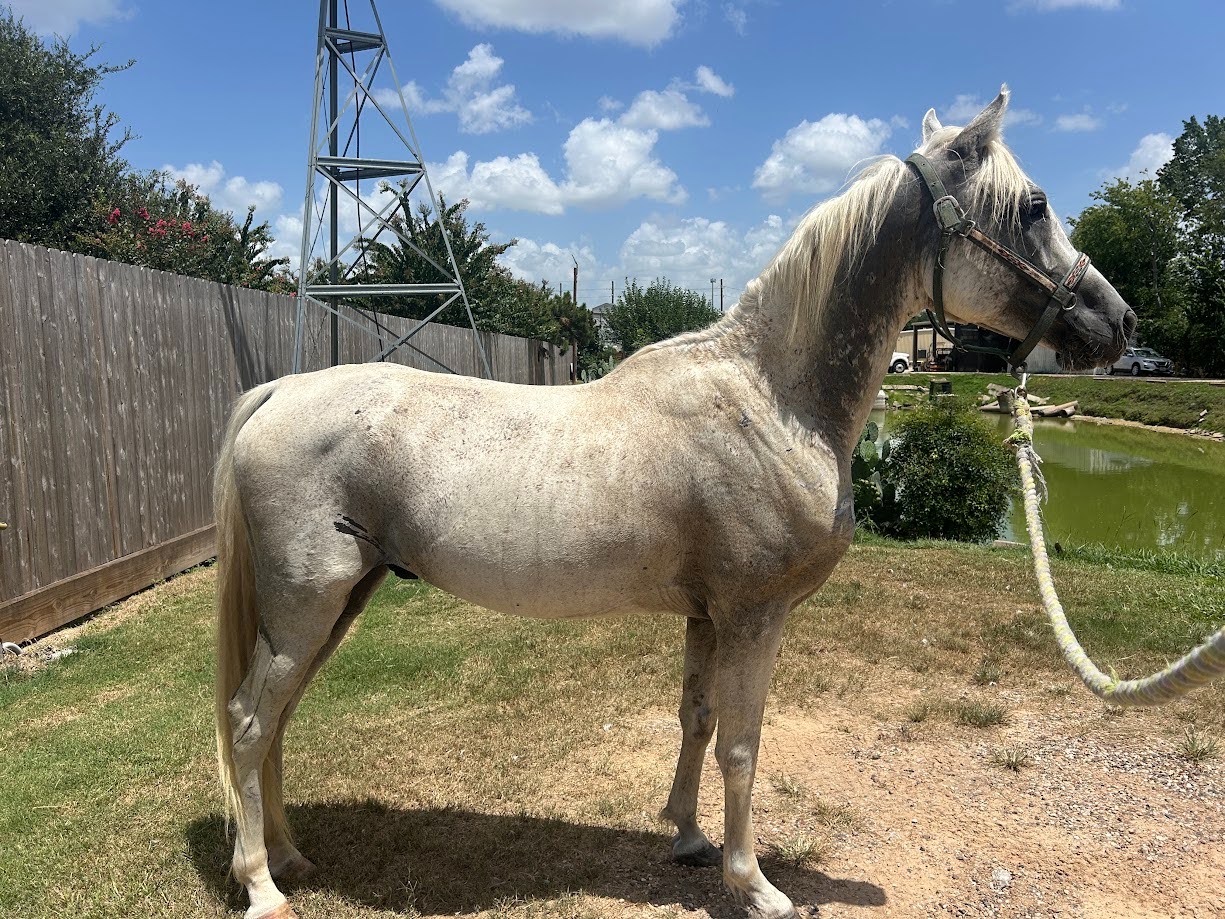 It removed the barrier that had been holding him back. No longer a stallion, Ramses became a safer, more practical match for a wider range of families. The aggression that had forced him to live apart from his siblings began to ease, opening the door to a life with other horses again.
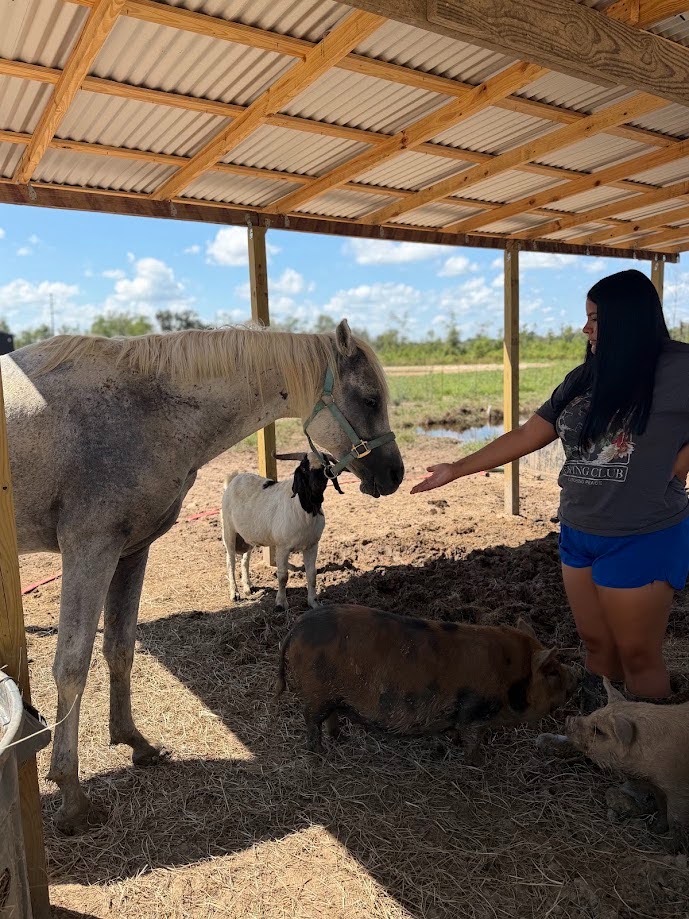
That gelding was the key to his next chapter, and it paid off. During Clear the Shelters in August, Ramses found his forever home, his adoption fee sponsored by Gexa. A horse who once couldn't even share a pasture with his own family finally got the second chance he deserved.
A Chance for Your Horse, Too
Ramses' story is a reminder that routine care can change a horse's life — and it's exactly the kind of care Houston Humane Society will be offering at its Community Equine Care Day this November. The event gives local horse owners and rescue partners access to essential veterinary services, including gelding, so more horses can get the care they need to stay healthy and ready for their own second chances.
Whether your horse needs a routine procedure or a health check, it's an opportunity worth marking on your calendar.
Before the Procedure
The pre-op check: Your vet will typically do a physical exam before surgery to make sure your horse is healthy enough for anesthesia and the procedure. This is a good time to ask questions and flag anything unusual you've noticed.
Timing: Most colts are gelded anywhere from a few months old to a few years. There's no single "right" age; it often depends on your goals, the horse's temperament, and your vet's recommendation. Talk it through with them rather than picking a number arbitrarily.
Questions to ask your vet:
- Will this be done standing or under general anesthesia?
- What sedation and pain control will be used?
- Should I fast my horse beforehand?
- What supplies should I have ready at home?
Prepping the stall: Set up a clean, dry recovery space before the big day. You'll want fresh bedding, easy access to water, and a way to keep the horse quiet and contained afterward.
The Day of the Procedure
Castration is typically done under sedation, sometimes with general anesthesia. The actual surgery is quick, usually under 30 minutes. Your vet will remove both testicles through small incisions, and the site is left to drain and heal naturally in most cases.
Most horses go home the same day. Expect them to be a little wobbly and sleepy as the sedation wears off.
Recovery & Aftercare
The first 24 hours: Keep your horse in a clean stall with fresh water and hay. Some swelling is normal. Watch for signs that something's off: heavy bleeding that doesn't stop, a fever, or swelling that keeps growing past the first day or two.
Exercise restrictions: Your vet will give you specific guidance, but in general, plan on several days of stall rest followed by gradually increasing turnout. Too much movement too soon can delay healing or cause complications.
When to call the vet:
- Bleeding that won't stop or is heavy
- Fever or signs of infection
- Swelling that gets worse instead of better after a few days
- Loss of appetite or lethargy
- Difficulty urinating
What Changes After Gelding — and What Doesn't
 It's a myth that a gelding instantly becomes calm and easygoing. Hormones don't disappear overnight. It can take weeks to months for testosterone levels to drop and behavior to settle. Some geldings stay spirited their whole lives — that's often just their personality, not their hormones.
What you can typically expect over time: less interest in mares, fewer stallion-like behaviors like calling, marking, and aggression around other horses. Patience is key, but don't expect a personality transplant. For a horse like Ramses, that reduced aggression meant the chance to live with other horses again instead of being isolated for everyone's safety.
And for rescue horses like Ramses, gelding is about more than behavior. It removes a barrier to adoption and makes a horse a safer, more practical match for a wider range of families, a real step toward a second chance.
Common Myths, Debunked
- "Geldings are always calmer." Not necessarily. Temperament is influenced by training, handling, and genetics too.
- "Older colts can't be gelded." Horses can be gelded at any age, though recovery and behavior changes may vary.
- "They need to be worked hard right after surgery." Actually, the opposite — rest is what promotes healing.
The Bottom Line
Castration is a routine procedure, but it's still surgery, and your horse deserves careful planning and attentive aftercare. Follow your vet's instructions, keep the recovery stall clean and quiet, and don't hesitate to call with concerns; that's what they're there for.
Every horse is different, so when in doubt, check with your vet. And if you're in the area, consider stopping by Houston Humane Society's Community Equine Care Day this November; you never know whose second chance might start there.
Princess Bednarski graduated from The Ohio State University in 2014 with an AAS in Horse Production and Management. Her career in equine care began with hands-on experience as a rehabilitation technician. She later worked as an assistant barn manager for Byler Performance Equine until 2017, specializing in wound care, physical therapy, rehabilitation, and training.
Her expertise expanded beyond the barn into animal care facilities. As a Lab Animal Technician at MD Anderson and an Animal Care Technician at BARC, Bednarski gained valuable insight into facility inspections and the expectations of care in both laboratory and shelter settings. She then returned to the performance horse world as Assistant Barn Manager for a Grand Prix Show Jumper, where she developed management and hands-on experience in the care and consistency of high-performance horses. Bednarski also served as a polo groom for Travelers Rest and San Ysidro Brazos.
Beyond her professional roles, she is deeply committed to the horses she works with. Today, Bednarski brings all of this experience together as Livestock Manager, where she oversees the care of animals in need. She currently has two horses and two dogs that she adopted from Houston Humane Society.